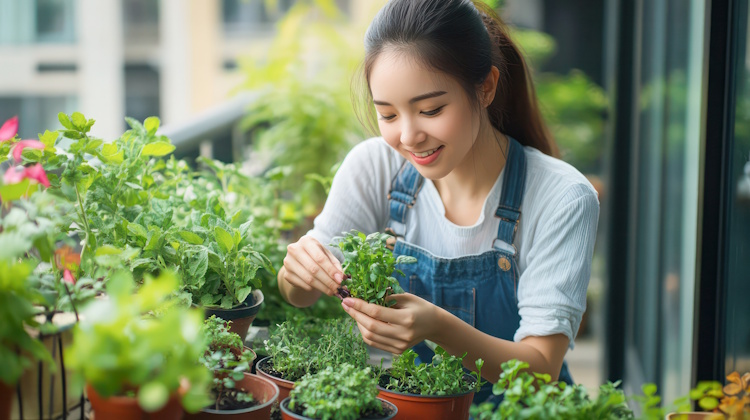
Do you feel the urge to dig into the soil as soon as spring arrives? Or are you just starting to dream about growing your own plants? Whether your garden is a single pot on a balcony or a large backyard, these books will help you grow your own food. You can find even more recommendations on the library’s curated list of gardening books.
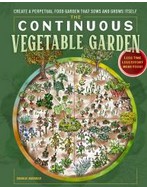 Nardozzi, C. (2026). The continuous vegetable garden: Create a perpetual food garden that sows and grows itself. Cool Springs Press. Nardozzi, C. (2026). The continuous vegetable garden: Create a perpetual food garden that sows and grows itself. Cool Springs Press.
If you have a small garden but are not overly fond of the hard work needed to maintain it, this is the book for you. Nardozzi shares four key strategies to save time and money while making your garden more sustainable. The four strategies are self-sowing vegetables, perennial crops, minimal maintenance and extended seasons. The last point may not work as well in Finland unless you have a greenhouse. |
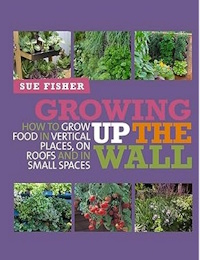 Fisher, S. (2013). Growing up the wall: How to grow food in vertical places, on roofs and in small spaces. Green books. Fisher, S. (2013). Growing up the wall: How to grow food in vertical places, on roofs and in small spaces. Green books.
No backyard? No problem! Fisher’s book is a practical guide to vertical gardening — growing food on walls, fences, balconies, and rooftops. |
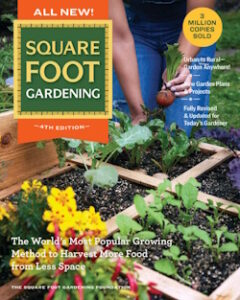 Square Foot Gardening Foundation. (2025). All new square foot gardening: The world’s most popular growing method to harvest more food from less space (4th edition.). Cool Springs Press. Square Foot Gardening Foundation. (2025). All new square foot gardening: The world’s most popular growing method to harvest more food from less space (4th edition.). Cool Springs Press.
This method, first introduced by Mel Bartholomew, is designed to grow a large harvest in a small, organised space. Using grids and high-density planting, square foot gardening can reduce work by up to 80% and cut waste by up to 90% compared to traditional gardening. It’s a great option for anyone who wants maximum results from minimal space. |
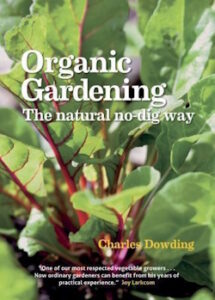 Dowding, C. (2013). Organic gardening: The natural no-dig way (3rd ed.). Green. Dowding, C. (2013). Organic gardening: The natural no-dig way (3rd ed.). Green.
Gardening without digging sounds too good to be true, but Dowding shows it works. His no-dig method saves time and effort by mimicking nature. Key principles include: 1) Never turn the soil, 2) Always use compost and 3) Smother weeds with cardboard instead of chemicals. |
 Mollison, A. M. (2021). Introduction to Permaculture. LibreTexts. Mollison, A. M. (2021). Introduction to Permaculture. LibreTexts.
This book is perfect for anyone interested in a holistic approach to gardening and sustainability. Permaculture is about working with nature, not against it. Mollison, who coined the term in the 1970s, introduces the core ideas of sustainable living and gardening. Everything starts with three simple ethics:
|
Copilot Clear Language Agent was used to check the spelling and comprehensibility. Clear Language Agent was created for HAMK by Lotta Linko. Image: Adobe Stock.