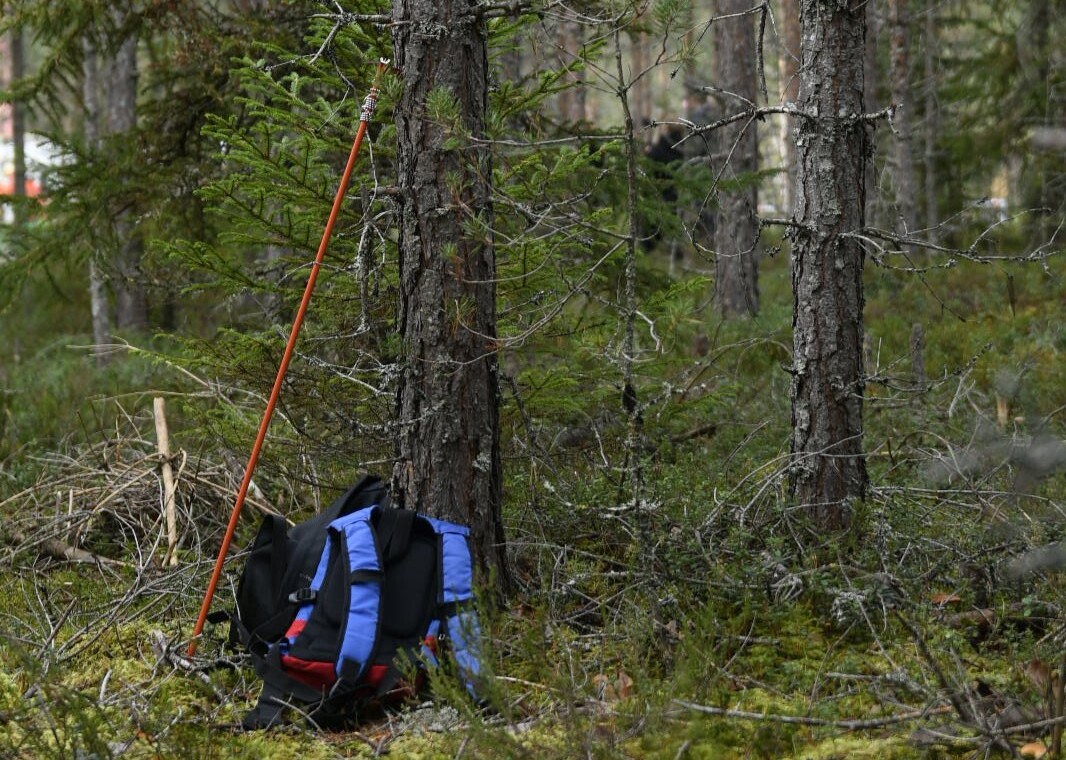
Everyone has a relationship with nature, be it deep, respectful or distant. In Finland, there is also a strong connection with the forest. Nature and forest may even be synonymous to someone living in Finland (Häyrinen L. & Pynnönen, S. 2020). The more we spend time somewhere, the closer our relationship with that place is. But what kind of a relationship do we have with the forest?
Forest and emotions
Forestry is a hot topic in current Finland, and the debate is often quite heated. Everyone has an opinion on matters connected to the forest. This is understandable, because forests in Finland are mostly privately owned and a remarkable source of income for many. However, Halla & Laine (2022, p. 439) emphasize the importance of also understanding the meaning of emotions in these debates. What creates these emotions? Why do we care about what happens to the forests?
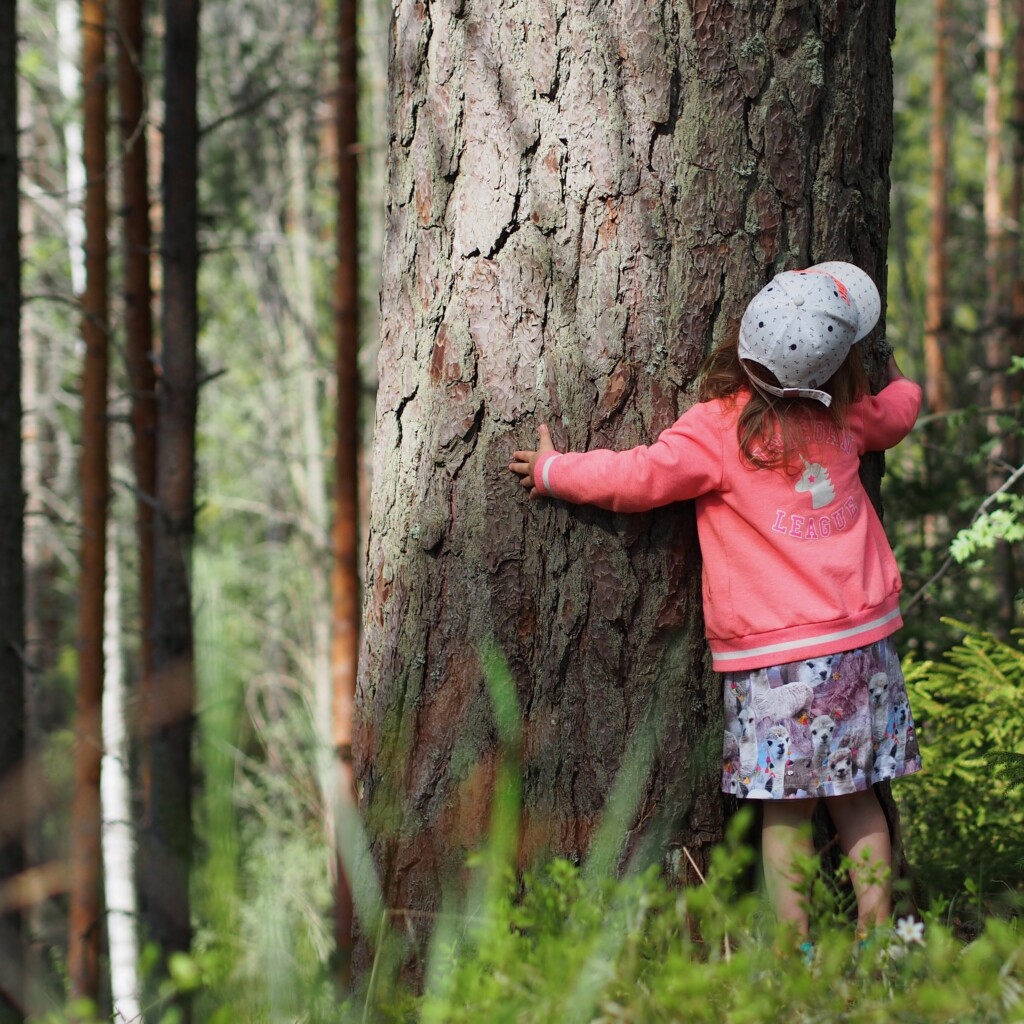
The Finnish forest relationship is an essential part of the Finnish culture. This is proven by the fact that it is one of the official cultural, living heritages in Finland, promoted by the Finnish Heritage Agency (Ministry of Education and Culture, 2017). Forest surrounds us and we spend time in the forest relaxing, doing sports, or picking berries.
Vainio et al. (2024) launched a national survey to study the relationship the Finns have with specific trees and even tree friends. Out of the 1662 respondents, most described themselves as having a strong connection with nature (Vainio, 2024, pp. 4-5). The respected qualities and assets of nature the respondents mentioned were beauty, recreation, biodiversity and spiritual experiences, among others. The activities the respondents were involved with were walking, collecting natural products and relaxing, just to mention a few. (ibid.)
HAMK students in the forest
Häme University of Applied Sciences educates forestry experts in Evo, and we are just starting our fourth year of studying forestry also in English. There have been students in Evo for over 160 years, and the forest is our place of study and our future work place. One would suspect that in Evo we find people with strong connections with nature and the forest. But what do Evo forestry students really think? What kind of a relationship do they have with the forest? Let’s find out!
Lukas is an exchange student from University of Applied Sciences Erfurt. He thinks that his relationship to forest is both professional and emotional:
“When I enter a forest there is always an interesting property I can enjoy. Either it is the beauty of natural primal forest wild and structured or the joy of high productive and high values assets even if the forest is not beautiful in its appearance.”
Lukas’ relationship with the forest started with recreational uses, but these days he also sees the forest through a forestry student’s relascope!
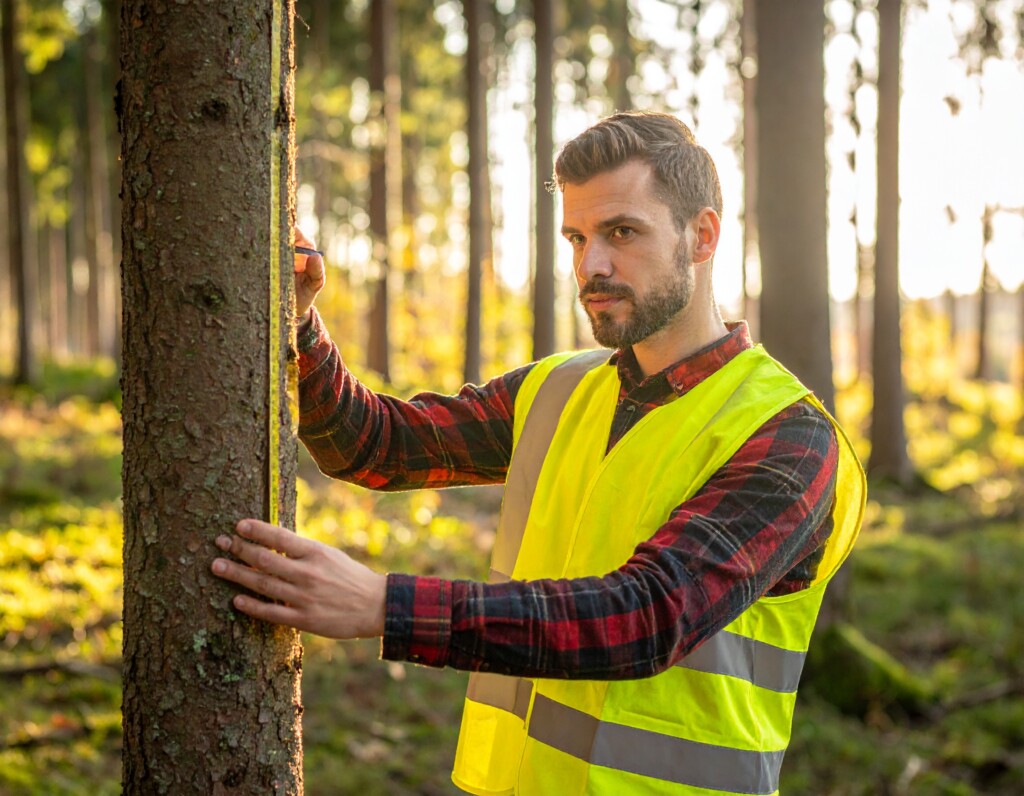
Roy is a HAMK forestry student. He feels very at home in a Finnish forest:
“In Finland, the forest is more like a friend to me than a location. I feel more grounded, take deeper breaths, and slow down there. So, there I can feel that I am living. I am reminded that I am a part of something greater and more timeless by the peaceful pathways, the atmosphere In forests, and the changing of the seasons.”
Roy reminds us that the forest is a home, a teacher, and a sanctuary to all of us. To find out more, we conducted a small survey to HAMK Natural Resources international students in Evo, Mustiala and Lepaa to find out what kind of a relationship the students have with the forest.
The first-year international students studying on Evo campus visit the forest most often. Over half of the Evo respondents visit the forest either daily or several times a week. 45 percent of Lepaa and 53% of Mustiala first-year students, on the other hand, visit a forest monthly or less than monthly. They spend time on fields and in gardens and parks, but mostly because of lack of time they only rarely spend time in forests.
We also asked about how the students feel in the forest, and got some quite surprising results. Mustiala students, probably because of the lack of experiences in a forest, found it hard to choose what they felt. Lepaa students mostly feel peace and love in a forest, and only some feel frightened. They also saw that spending time in a forest improves their mental health. They enjoy their time in a forest with a score of 3.7 out of 5. Evo students, who spend most time in a forest, were also inspired and excited by forests but they also felt contempt, conflict and even hate. On a scale of 1 to 5, Evo students gave a medium of 3.0 to the claim that their mental health improves. This would suggest that spending time in a forest studying increases the students’ stress volume.
Out of all the 120 respondents, 83% still wanted to visit the forest more often. Even Evo students, who clearly spent more time in a forest, were not able to visit the forest as often as they would want to. From the results we can conclude that we in Evo also need to be able to relax in the forest and just spend time there without stress and tasks to complete. We could possibly even benefit from a tree friend!
References:
Halla, T. & Laine, J. (2022). To cut or not to cut – emotions and forest conflicts in digital media. Journal of rural studies. 94, 439-453. http://dx.doi.org/10.1016/j.jrurstud.2022.07.019
Häyrinen L. & Pynnönen, S. (2020). A Review of the Concepts and Measurements for Connection to Nature and Environmentally Responsible Behaviour—a Call for Research on Human-Forest Relationships. Current Forestry Reports. doi:10.1007/s40725-020-00131-6
Ministry of Education and Culture. (2017, Nov 24). 52 elements included in the National Inventory of Living Heritage. https://okm.fi/en/-/elavan-perinnon-kansalliseen-luetteloon-52-kohdetta
Vainio, K., Korrensalo, A., Takala, T., Räsänen, A., Lummaa, K., Tuittila, E., . . . Luonnonvarakeskus. (2024). Do you have a tree friend?: Human–tree relationships in Finland. Wiley.